Choosing the right shower set in 2026 requires more than comparing polished photographs and discounted prices. Global buyers must examine water pressure, connection standards, corrosion resistance, spare parts, and installation support. A beautiful set can disappoint when its thread size does not match local plumbing. That mistake is common.
This guide explores the 2026 best Bathroom Sets Shower for apartments, hotels, family homes, and renovation projects. We compare thermostatic controls, rainfall heads, handheld sprays, diverters, finish durability, and water-saving performance. Real bathroom conditions matter. Hard water can stain chrome. Weak pressure can reduce a wide rain shower to a thin trickle. Small details decide daily comfort.
Richard Trethewey, a respected plumbing and heating expert, has often stressed a practical principle: “The best plumbing solution is the one that works reliably for the people using it.” That idea shapes this review. Product claims are considered, but they are not accepted blindly. Independent certifications, warranty terms, installation manuals, and verified buyer experiences receive greater weight. Still, no ranking can fit every country perfectly. Local water pressure, building codes, and replacement-part access may change the final choice.
Expect clear comparisons, not exaggerated promises. We highlight models that balance design, performance, maintenance, and long-term value. Some premium options look impressive but may be excessive for a compact bathroom. Some affordable sets perform well, yet their finishes may age faster. The right decision is rarely the most expensive one. It is the one that remains dependable after months of wet hands, soap residue, and everyday use.
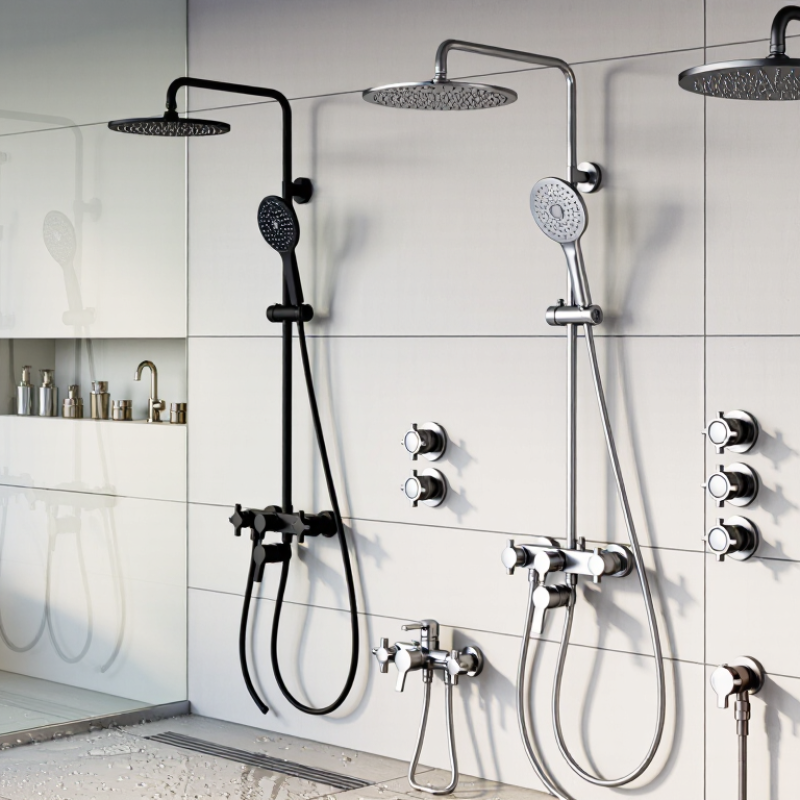
Global buyers will see three main shower set types in 2026: exposed, concealed, and multifunction systems.
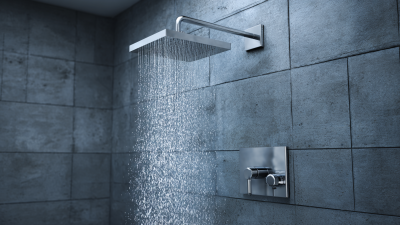
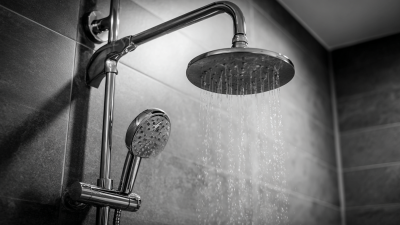
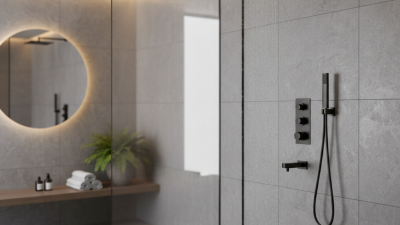
Exposed sets suit renovation projects because pipes remain accessible. Concealed sets create a cleaner wall appearance, but installation needs accurate depth planning. Multifunction sets may combine a rain shower, hand shower, and body jets. They require stronger water flow and careful pressure testing.
Selection should begin with the building, not the finish. Measure available water pressure, outlet spacing, pipe threads, and ceiling height. A thermostatic valve can help maintain stable temperature during pressure changes. Pressure-balancing valves may suit simpler systems. Check whether the hand shower includes a flexible hose and a secure wall bracket. Small details matter during daily use.
Material claims need evidence. Prefer corrosion-resistant metal for exposed parts, durable seals, and easy-to-clean spray nozzles. Ask for test reports, installation instructions, warranty terms, and replacement-part availability. Local plumbing rules and water-efficiency requirements also deserve attention. I once underestimated the importance of thread compatibility; a beautiful set still needed an adapter. That added cost and delayed installation. Product photos can mislead. Confirm dimensions, internal components, and service access with technical drawings. A qualified installer should verify the wall structure before concealed installation.
For global buyers, water efficiency should be checked before appearance or spray patterns. The EPA WaterSense limit is 2.0 gallons per minute, equal to about 7.6 liters per minute. The EU reference level is commonly 9.5 liters per minute, or roughly 2.5 gallons per minute. These figures are not interchangeable. A lower flow rate can reduce water use, but it may also change the shower’s pressure and comfort.
Look for a verified flow rating, not only words such as “eco” or “water saving.” Testing should consider water pressure, inlet temperature, and the shower’s operating position. A shower set rated at 2.0 GPM may perform differently in a high-rise apartment than in a low-pressure rural home. Pressure-compensating technology can help maintain a steadier spray. Still, it cannot repair poor plumbing.
Check whether the product carries accepted efficiency documentation for its destination market. Certification details should match the exact model and flow-control insert. Installation also matters. A clogged filter, oversized pipe, or partially closed valve can distort performance. The specification may look perfect on paper. Real use can be less consistent. That is an important limitation for buyers comparing products across regions. A practical test is simple: collect the shower’s output for one minute and measure it with a marked container.
Comparative buyer guide for shower sets, flow rates, certification considerations, and regional compatibility
| Evaluation Dimension | EPA WaterSense Reference | EU-Oriented Reference | Practical Buyer Guidance | Recommended Data to Verify |
|---|---|---|---|---|
| Maximum showerhead flow rate | No more than 2.0 gallons per minute (GPM), approximately 7.57 L/min, under the applicable test conditions. | 9.5 L/min, approximately 2.51 GPM, is a commonly specified market target but is not a single universal EU-wide showerhead limit. | Choose a model at or below the requirement used in the destination market. Do not treat 9.5 L/min as interchangeable with the stricter 2.0 GPM limit. | Rated flow in both GPM and L/min, test pressure, and whether the value applies to the hand shower, overhead shower, or complete set. |
| Water-saving performance | A qualifying product must meet the applicable WaterSense criteria for flow, spray force, and spray coverage at specified test pressures. | Look for documented flow control and technical evidence supporting the stated L/min rating. National rules, local labels, and voluntary schemes may differ. | Prefer pressure-compensating flow control where supply pressure varies, especially in multi-country projects. | Independent test report, flow-rate curve, pressure range, and measured performance at low, medium, and high inlet pressure. |
| Spray comfort | Water efficiency should not be achieved only by reducing user-perceived spray force or usable coverage. | Evaluate spray quality at the declared flow rate rather than relying only on the number of spray modes. | For everyday use, a broad rain spray plus a concentrated rinse spray generally provides better usability than many poorly differentiated modes. | Spray diameter, spray-force test results, mode descriptions, and performance at the minimum recommended pressure. |
| Complete shower-set configuration | The WaterSense flow requirement generally concerns the showerhead product; valves, diverters, hoses, and outlets must be assessed separately. | A set may include an overhead shower, hand shower, rail, hose, diverter, and mixer. The combined flow depends on which outlets operate simultaneously. | Specify whether the stated flow is per outlet or total system flow. For dual-outlet use, confirm the maximum combined rate. | Outlet-by-outlet flow rate, simultaneous-use flow, diverter arrangement, and installation diagram. |
| Pressure compatibility | Performance is assessed across specified pressure conditions; the product still needs adequate pressure for satisfactory spray quality. | Actual household pressure varies by country, building height, pump system, and plumbing design. | For low-pressure installations, choose a model tested for low inlet pressure instead of assuming a high-flow product will perform better. | Minimum and maximum operating pressure, recommended pressure, pressure-compensation details, and compatibility with pumps or thermostatic mixers. |
| Temperature safety | WaterSense is primarily a water-efficiency specification and does not replace local plumbing or product-safety requirements. | Thermostatic control, anti-scald protection, and temperature-limit features should be checked against the destination market’s requirements. | A thermostatic mixer is preferable for households, hotels, healthcare facilities, and other locations where temperature stability is important. | Maximum temperature stop, anti-scald function, temperature stability, response time, and applicable conformity documentation. |
| Connection and installation | Regional plumbing compatibility must be checked independently of the efficiency specification. | Thread types, pipe centers, wall depth, and concealed or exposed installation formats differ across markets and projects. | Confirm connection standards and rough-in dimensions before ordering large quantities. | Inlet thread, pipe-center distance, wall outlet size, hose length, mounting-hole spacing, and rough-in drawing. |
| Material and durability | WaterSense does not by itself certify every material, finish, or durability characteristic. | Material safety, corrosion resistance, and product conformity should be verified according to the destination market and intended building use. | For humid or hard-water environments, prioritize corrosion-resistant construction and easy-clean spray nozzles. | Body material, cartridge type, surface-finish test information, nozzle material, limescale-cleaning method, and warranty period. |
| Best-fit product profile | Certified high-efficiency showerhead with a maximum flow of 2.0 GPM and verified spray performance. | Shower set with a documented flow of 9.5 L/min or lower where that specification is requested, subject to local requirements. | Select based on local compliance first, then pressure, comfort, installation, maintenance, and total lifecycle cost. | Technical datasheet, conformity documents, laboratory results, installation manual, spare-parts availability, and packaging labels. |
| Water-use comparison | At 2.0 GPM, a 10-minute shower uses about 20 gallons, or 75.7 liters, before considering temperature or system losses. | At 9.5 L/min, a 10-minute shower uses about 95 liters, equivalent to approximately 25.1 US gallons. | Lower flow can reduce water and water-heating demand, but actual savings depend on shower duration, temperature, household behavior, and whether outlets run together. | Flow per outlet, average shower duration, hot-water energy source, and expected number of uses per day. |
For global buyers, shower-set compliance begins with the installation market, not the product photograph. ASME A112.18.1 and CSA B125.1 establish performance requirements for plumbing supply fittings, including pressure resistance, leakage control, materials, and durability. Buyers should request current test reports, not only a printed compliance claim. Paper compliance is not field safety.
A thermostatic set should also manage temperature changes when another tap opens. Look for tested anti-scald performance and clear temperature stops, such as a practical 38°C setting. The U.S. Environmental Protection Agency’s technical specification limits efficient showerheads to 2.0 gallons per minute, compared with the older 2.5-gallon benchmark. Its household analysis estimates savings of about 2,700 gallons of water annually. Flow performance still depends on pressure. A beautiful spray can disappoint in a high-rise building.
WRAS approval matters for products entering the United Kingdom, where fittings must satisfy national water regulations and installation requirements. It should not be treated as worldwide approval. A 2024 European Environment Agency assessment also highlights increasing pressure on regional water resources, making flow control and leak prevention more than marketing features. Check hose connections, backflow protection, valve markings, and replacement-part availability. Then verify local acceptance with the importer or authority. One certificate may be insufficient. I would leave room for that uncomfortable possibility.
This comparison shows how each framework relates to common buyer checkpoints. A value of 1 means the framework is relevant to that checkpoint; it does not represent a certification score. ASME A112.18.1 and CSA B125.1 address plumbing supply fitting requirements, while WRAS provides a UK water-regulations approval route for suitable products and materials.
For global buyers, a shower set should be judged by construction, not showroom shine. In hands-on inspections, brass feels dense and machines cleanly around threads and valve bodies. Its weight can suggest quality, but weight alone proves little. Poorly cast brass may hide pores, uneven walls, or weak internal threads. Look inside. Stainless steel resists rust well, especially in humid bathrooms and hard-water regions. However, its grade matters; low-quality steel can stain near welds or threaded joints. We check magnet response, surface uniformity, weld finishing, and thread engagement.
A PVD surface adds color and abrasion resistance through a controlled vacuum coating process. During evaluation, samples face salt spray, repeated hot-cold cycles, abrasion, and household cleaner exposure. We inspect edges, corners, and handle contact points afterward. These areas fail first. PVD often performs strongly, but preparation controls the result. An uneven substrate can leave visible marks beneath an expensive-looking finish. Coating thickness, adhesion, and color consistency should be measured, not guessed from photographs.
I once trusted a bright black finish too quickly. After repeated cleaning, a weak edge showed early wear. That mistake changed my inspection routine. No finish is truly maintenance-free. Buyers should request test conditions, exposure times, and failure photographs before comparing suppliers. A reliable shower set also needs smooth cartridge movement, clean water passages, and secure mounting hardware. Materials matter, but manufacturing discipline matters more.
Choosing the best bathroom shower set for global buyers starts with compatibility, not appearance. The thread must match the building system. G1/2 is common in many markets, while 1/2-inch NPT uses a different thread profile. They may look similar, but they are not interchangeable. Use an approved adapter when necessary.
Water pressure also varies by property and region. Many thermostatic valves perform best within a defined pressure range, often around 1–5 bar. Confirm the manufacturer’s tested range before purchase. The U.S. EPA WaterSense specification limits showerheads to 2.0 gallons per minute, or 7.6 liters per minute. Lower flow can save water, but it may feel weak in low-pressure apartments. That trade-off deserves a real test.
Thermostatic control matters most where household temperatures fluctuate. Look for recognized safety testing, stable temperature regulation, and an accessible cleaning filter. WHO and UNICEF’s 2023 Joint Monitoring Programme reported that 2.2 billion people lacked safely managed drinking water in 2022. Water quality and maintenance cannot be treated as minor details. Check local filtration needs and replaceable cartridges.
Warranty terms should state coverage, spare-part availability, labor limits, and international service procedures. A long warranty can still be inconvenient. My checklist is not perfect; installation quality often decides the outcome. Record pressure readings, thread measurements, and purchase documents before installation. That small effort prevents expensive guessing later.